Hey there, fellow print pros! Let’s cut to the chase—if you’ve ever messed up a print run because of inconsistent ink laydown or wasted cash on a wonky anilox sleeve, you know how critical getting the size right is. I’ve been in the anilox sleeve game for over a decade, chatting with flexo, gravure, and digital print shops daily, and one question comes up more than anything: “What are the standard sizes of anilox sleeves?” Anilox Sleeve

I get it—size specs feel like a foreign language when you’re knee-deep in press maintenance or cranking out custom packaging orders. No stuffy engineering jargon, I promise—we’re gonna break this down like I’m venting to a buddy who’s also dealt with a press that’s throwing ink blobs.
First, let’s remember: anilox sleeves aren’t one-size-fits-all. They’re custom-made for your specific press—different press brands, model lines, even individual lineups have their own specs. But there are a ton of industry-standard sizes that most shops stock or expect, so you don’t have to reinvent the wheel every time you need a replacement. Let’s start with the basics: core diameter, overall length (that’s the face length, not the sleeve’s long side), and transfer width (where the ink actually hits your substrate). These three numbers are non-negotiable—get ’em wrong, and your sleeve’s useless, period.
First up, core diameters. This is the hub that slips onto your press’s anilox roller shaft, and it’s the most common standard I’ve seen because core sizes are universal across big press brands. Let’s run through the most common ones:
- 1 inch (25.4mm): This tiny core is for small-format flexo presses—think label printers, narrow-web digital presses, or even desktop proofing presses. I’ve had a customer who prints sticker packs for a local coffee shop swears by these, they’re perfect for runs under 10k.
- 1.5 inch (38.1mm): Super popular for mid-range narrow-web presses, still used for labels, envelopes, and small corrugated runs. Way more rigid than the 1-inch core, so less warping when you’re cranking up the print speed.
- 2 inch (50.8mm): The workhorse of the industry. This is the go-to for wide-web flexo, mid-sized corrugated, and even some flexible packaging presses. 9 times out of 10, if a shop calls us panicking about a bad sleeve, it’s a 2-inch core. They balance rigidity and flexibility perfectly for most applications.
- 3 inch (76.2mm) and 4 inch (101.6mm): These are for heavy-duty wide-web and large-format corrugated presses. When you’re printing shipping boxes the size of a refrigerator, you need a thicker core to handle the torque of a big press without bending. I had a guy from a corrugated plant tell me 4-inch core sleeves don’t flex at all mid-run—game-changer for consistent ink.
- Sometimes we see 6 inch (152.4mm) for ultra-wide sheet-fed gravure presses, but that’s more niche, mostly used for magazine printing or large wall murals—way less common for everyday print shops.
Now, length specs. This is where people mess up all the time—they order a sleeve that’s too short, and it leaves unprinted gaps on their substrate, or too long, and it rubs against the press’s side frames, wearing down the sleeve fast. The standard here is split into narrow-web (under 13 inches wide) and wide-web (over 13 inches) because that’s how most press manufacturers categorize their equipment.
For narrow-web presses, standard face lengths are like 10 inches, 12.7 inches (that’s 323.8mm, super common for label presses), 15 inches, and 17 inches. I always tell new customers: measure your press’s anilox opening, not the old sleeve’s length—press manufacturers often fudge the old sleeve numbers.
Wide-web is where it gets bigger: standard face lengths here are 20 inches, 25 inches, 30 inches, 40 inches, and even 60 inches for super wide packaging runs. I had a custom bag manufacturer that needed a 58-inch sleeve once—we adjusted it 0.5 inches to fit their 58.5-inch press gap, no problem.
Wait, but hold on—core diameter and length aren’t the whole story, right? There’s also the transfer width, and that’s tied to your anilox cell count, but people still mix up size specs with cell counts. A common mistake: a customer will say “I need a 2-inch 600 LPI sleeve” and forget the length, which is why we always send a follow-up email. But when it comes to standard sizes, these core and length numbers are the baseline.
Now, let’s talk about why standard sizes matter so much. If your press is a Mark Andy, Flexotecnica, or WS Flexo (those are the big narrow-web brands), they all use the same standard 1.5-inch or 2-inch core diameters, so you don’t have to pay a premium for a custom core. Same with big wide-web presses from Bobst or Heidelberg—they follow industry standard core sizes, so lead times are shorter, prices are lower, and you can swap sleeves between presses if you ever upgrade. I’ve seen a customer with two Mark Andy presses, same model, who swaps a 12.7-inch 2-inch core sleeve between them depending on the job—no modifications needed, that’s the magic of standard sizes.
But wait, let’s be real—standard sizes aren’t one-size-fits-all for every press. Some custom presses, or presses that were built before standard specs were set, might have weird sizes. I once had a customer with a vintage 1980s flexo press that had a 1.75-inch core, not 1.5 or 2. That’s when we have to make a custom sleeve, but that’s rare—less than 5% of our orders are custom core sizes, most are standard.
Also, don’t confuse anilox sleeves with solid anilox rolls—sleeves are way more popular now because they’re lighter, easier to change, and cheaper to replace than solid rolls, which is why their standard sizes evolved to match that demand. Back in the day, solid rolls were all custom, but as sleeves took over, press brands adopted standard sizes to make life easier for print operators.
Here’s a pro tip I’ve picked up over the years: don’t just go by your old sleeve’s label. Press wear over time can widen or narrow the mounting area, so always measure three spots on your press’s anilox shaft—top, middle, bottom—to get the exact core diameter, and measure the distance between the side frames (the gap where the sleeve sits) to get the length. I’ve had a customer swear his old sleeve was 12 inches, but the press’s gap was 12.5 inches, so we made a 12.5-inch standard sleeve that fit perfectly, and he saved $150 over a custom size.
Another thing: when you’re looking at standard sizes, keep in mind that metric vs. imperial is a thing. Most US press specs are in inches, but European and Asian presses often use millimeters. So a 2-inch core is roughly 50.8mm, which is the standard metric standard core too—super convenient, no conversion headaches for global shops. The 12.7-inch narrow-web sleeve is exactly 323.85mm, which is the standard metric face length for many European label presses.
Now, let’s address the elephant in the room: do all sleeve vendors follow the same standard sizes? Nope. Some small shops that make sleeves on the side might fudge measurements, so you have to work with a supplier that knows the industry specs. That’s why we keep a master list of every major press brand’s standard sizes—Mark Andy, Flexotecnica, Bobst, Heidelberg, even niche brands like Nilpeter. We can pull up your press model in 2 seconds and give you the exact standard size, no guessing. I’ve had a customer call at 8 PM panicking for a run the next day, we looked up his Nilpeter press, gave him the standard 2-inch core, 12.7-inch face sleeve, and he had it ready for pickup the next morning. That’s the value of knowing standard sizes.
Wait, also, let’s talk about common mistakes with standard sizes that I see all the time. First, ordering the wrong core diameter—if your core is too small, it will wobble mid-run, causing ink streaks. Too big, and it won’t fit on the shaft, period. Second, ordering a sleeve that’s too long—like I said before, it rubs on the press sides, wears the sleeve’s surface, and can even damage the press. Third, forgetting that some wide-web presses have staggered sleeves, so the length might be different for each side—always check that, I had a flexible packaging shop that did that once, wasted two sleeves before they double-checked.
If you’re still not sure if your sleeve is standard, here’s a quick litmus test: if you can order it off the shelf from most suppliers without a lead time over 2 days, it’s standard. If you have to wait a week or more, it’s a custom size. That’s a good rule of thumb for small shops that don’t have time to wait for custom parts.
Now, let’s wrap this up with what you actually need to do if you’re in the market for an anilox sleeve. Stop guessing, start measuring your press, or if you don’t wanna mess with that, give us the press brand and model, and we’ll pull the exact standard size for you. No jargon, no fine print, just the right size for your job. Whether you’re running small labels, big corrugated boxes, or custom flexible packaging, we stock all the common standard sizes so you can get your press back up and running fast, no wasted money on ill-fitting sleeves.
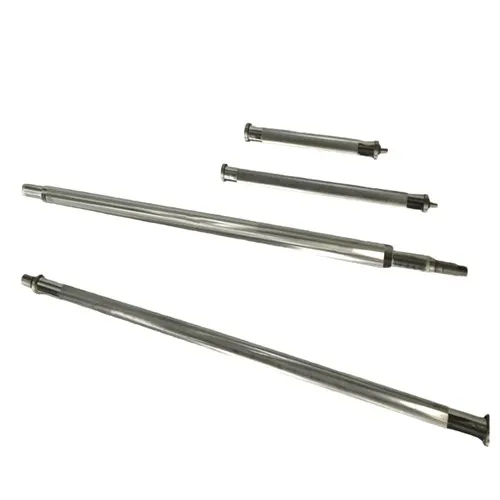
If you’re dealing with inconsistent ink, sleeve fit issues, or just need to replace a worn-out anilox sleeve, hit us up to chat through your specs. We’ll make sure you get the right size, no headaches, and maybe save you a few bucks along the way. Don’t let a bad sleeve kill your print run—let’s get it right.
Anilox Sleeve References:
- Flexographic Technical Association (FTA) Anilox Sleeve Specification Guidelines, 2022
- Bobst Wide-Web Flexo Press Standard Anilox Component Manual, 2021
- Mark Andy Narrow-Web Equipment Specification Document, 2020
- Nilpeter Anilox Sleeve Industry Standard Sizing Report, 2019
Kunshan Hanhan Co., Ltd.
We’re well-known as one of the leading anilox sleeve manufacturers and suppliers in China. We warmly welcome you to buy high quality anilox sleeve made in China here from our factory. If you have any enquiry about cooperation, please feel free to email us.
Address: No. 1093, B Zone, No. 2 Xugongqiao Rd, Huaqiao Town, Kunshan City, Suzhou, Jiangsu, China
E-mail: info@kshhroller.com
WebSite: https://www.kshh-roller.com/
