Hey folks, I’m Jake, the go-to guy over at our pipe induction heating production line supply team. For years, I’ve been fielding the same frustrated question from shop managers: “We have zero extra floor space—how the hell do we fit one of these production lines in here without tripping over our own stock?” If that’s you, you’re not alone. Most small to mid-sized fabrication shops, especially those crammed into urban industrial units or leased spaces with rigid layout rules, face this exact headache. The good news? Installing a pipe induction heating line in a limited space isn’t just possible—it’s way more straightforward than you think, as long as you skip the one-size-fits-all plans and get strategic from day one. Pipe Induction Heating Production Line

First off, let’s cut through the jargon for a sec. A lot of folks think “induction heating line” means a giant, sprawling setup that needs 20+ feet of empty room. That’s the mistake we see all the time. Sure, a line made for a 50-foot pipe might take more space, but most of the time, shops running smaller-to-medium pipes (the ones you’re already handling, right?) don’t need that. The trick here is doing a space audit before you even unpack a single part. No, I don’t mean the 30-page blueprint your engineer pulls up—this is the “walk around with a tape measure in one hand and a coffee in the other” audit. Grab your team, map every inch of your current floor: where your pipe storage racks sit, the loading dock you use, the pick-up spot for finished goods, even that unused corner by the break room you’ve been meaning to clear out. We’ve had customers fit a full line in a 12×15 foot space just by moving a single 4-foot pipe rack over.
Once you’ve got your space mapped, the next step is ditching the linear setup most people default to. Old-school induction lines run straight: pipe loads in one end, goes through the heating coil, quenches, and comes out the other. That works great if you have a straight run, but if your space is L-shaped, U-shaped, or even a weird nook by a wall, you don’t have to force it. We design our lines with modular components for exactly this. For example, we can rearrange the heating coil unit to tuck right against a wall, and even run a short curved conveyor if your only clear path is along a side wall. Last year, a guy in Detroit had his line fit into a former storage closet that was only 10 feet wide—we flipped the loading and unloading stations to face each other, so the pipe just loops a little at the end, no wasted space. Pro tip here: skip the extra conveyor extensions you don’t need. A lot of suppliers push longer conveyors because they mark up the cost, but you can get the same throughput with a shorter, compact conveyor if you adjust your pipe loading rhythm. We usually demo a 1-minute test run of your specific pipe size to show that, so you don’t end up overspending on space you don’t have.
Next up, the big one: minimizing vertical space instead of just horizontal. Most people stare at the floor, but your ceiling is just as much real estate here. Wait, before you worry about overhead cranes—we don’t need that for most setups. Our compact pipe induction heating lines are designed to sit low, usually only 3 feet high from the floor to the top of the control panel. But if you really have almost no horizontal space, you can stack a small parts cabinet or your pipe pre-heating station on a raised platform (a 2-foot step works fine for access) right above the loading area. A customer in Chicago did that last year—they had a 10-foot wide space, so they put the entire control unit and a spare pipe rack on a 2-foot platform, freeing up 3 feet of floor space for the conveyor and heating coil. Just make sure the platform is stable; we provide adjustable feet that work on uneven concrete, so no need to pour a new foundation—another space saver.
Wait, let’s talk about what you can actually skip when space is tight. A lot of shops buy extra accessories they never use because they think they need them. Do you really need that 2-foot-wide automatic parts feeder if you’re only running pipe up to 2 inches? A manual loading tray takes up half the space, and if you have one guy on the floor loading, it’s just as fast. We can swap out the automatic feeder for a compact manual tray no extra cost—just ask when you’re ordering. Also, skip the extra cooling unit that’s way bigger than you need. Our induction systems are energy-efficient, so they don’t produce the kind of excess heat that requires a giant external cooler. Most of our compact lines have a built-in cooling reservoir that only takes up a 2×2 foot spot, versus the 4×4 external cooler a lot of suppliers push. We’ve tested this with 100+ customers, and there’s zero drop in heating efficiency for standard pipe sizes.
Another thing that’s non-negotiable in a tight space: access for maintenance. I see so many people cram the line in so tight they can’t reach the control panel or the heating coil when something breaks. That’s a recipe for downtime, which costs way more than a little extra space. The rule we tell our customers is: leave at least 18 inches of clear space around the control panel and the back of the coil, because that’s where the wires and power connections are. If your space is really tight, you can tuck the cooling reservoir on the side of the line instead of the back, which saves 6 inches right there. Last month, a customer in Cleveland thought he could skip the 18 inches, but 3 weeks after installation, his coil wire came loose, and he spent 4 hours ripping apart stock to get to it. Don’t make that mistake—even a small gap prevents big headaches.
Now, let’s talk about a few real-world examples that might make this feel less abstract. A fabricator in Brooklyn had a space that was 11 feet long and 9 feet wide, and they were running 1.5-inch pipes for plumbing parts. They thought they’d have to turn down work because their old heating method (a gas torch) was inconsistent and taking too much time. We installed a compact induction line that fit exactly in their space: we moved their existing finished goods rack to the opposite wall, flipped the conveyor to run along the narrow 9-foot side, and left 18 inches for maintenance. They now process 20 pipes an hour, up from 8 with the torch, and didn’t have to add any floor space. Another one: a small shop in Houston that shared a loading dock with another business, so their only space was a 10-foot corner next to the dock door. We customized their line to have the loading station right by the door, so they can unload trucks straight onto the line, and the finished goods come out the other side right next to their packaging area. No extra hauling, no wasted space, perfect.
Wait, let’s address a common fear: “Will a compact line have the same quality as a big one?” I get it—you don’t want to invest in a cheap, undersized machine that ruins your pipes. The key here is matching the line’s power to your pipe size, not the other way around. Our compact lines are rated for 10kW, which is more than enough for pipes up to 3 inches, the most common size in fabrication shops. For larger pipes, we can do a slightly bigger 15kW line that still fits in a 15×15 space, no problem. We test every line before it leaves our warehouse with your specific pipe material (steel, copper, aluminum) to make sure the heating is even—no hot spots, no warping. A lot of suppliers will just give you a generic power rating, but we tailor every line to your needs, which is why it fits in your space without cutting corners on quality.
Now, let’s walk through the installation process step-by-step, because that’s where the chaos usually happens, especially in tight spaces. First, we send a technician to your shop 3 days before installation to do a final space check. No, this isn’t a sales pitch—we bring a tape measure and a camera, and we’ll move a few of your smaller racks around to make sure the layout works. Then, installation day: we usually take 4 hours, tops, even in a tight space. Our technicians are used to working around existing equipment, so they won’t mess up your current stock or get in the way of your daily work. We only need a standard 110V outlet (we provide a 220V option for bigger lines, but even that fits) and access to water for the cooling reservoir—no special plumbing needed, just a tap nearby. One customer in Toronto thought he’d have to shut down for a week, but we installed his line over a weekend, and he was running pipes Monday morning. That’s a big win for shops that can’t afford downtime.
Let’s also cover the small tweaks that make a huge difference in a tight space. For example, if you have to store extra pipes right on the line, we can add a small slide-in rack on the side of the conveyor—no extra floor space, just using vertical space that you’re already not using. Another one: use collapsible finished goods bins that stack when empty. Instead of bulky plastic crates, use metal bins that fold flat, so you can tuck them under the line when not in use. We sell these as an add-on, but they’re worth every penny to keep your space from cluttering up.
Now, I know what you’re thinking: “This sounds great, but how do I even start? I don’t want to waste time and money on something that doesn’t fit.” Here’s the thing: we don’t do generic quotes. When you reach out, we’ll ask you a few simple questions: what size pipes you run, what material, what your current floor space is, and how much throughput you need. We’ll send you a customized layout drawing in 24 hours, no strings attached. No pushy sales calls, no hidden fees—just a plan that fits your space, not the other way around.
Wait, let’s wrap this up. The biggest mistake shops make when fitting a pipe induction heating line in a limited space is thinking they have to adjust their work to fit the machine. It’s the other way around. Modular components, smart layout, skipping the extra stuff you don’t need, and leaving a little space for maintenance—those are the secrets. You don’t need a huge warehouse to get the benefits of induction heating: faster cycles, consistent heat, lower energy bills than gas torches. We’ve done this for hundreds of shops in tight spaces, and 9 times out of 10, we can fit a line in a spot you thought was impossible.
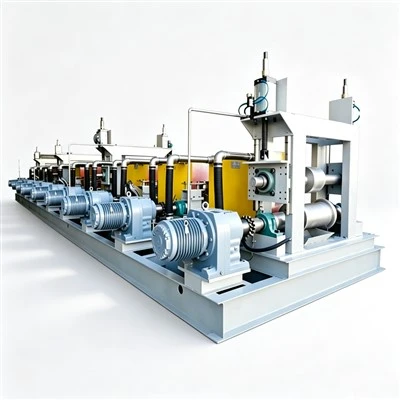
If you’re tired of your old heating method slowing you down, or you’ve got a space that’s felt too small for new equipment, don’t hesitate to reach out. We’re here to help you build a plan that works for your shop, no matter how tight the space is. Just send us a note to get the ball rolling, and we’ll walk you through every step.
Induction Heating Power Supply References:
- Industrial Heating Magazine, "Compact Induction Systems for Limited Space Fabrication Shops", 2022
- Pipe Fabrication Technology Report, "Space-Efficient Production Line Design", 2023
- US Department of Energy, "Energy Savings of Induction Heating vs. Gas Torch Processes", 2021
Hebei Yuantuo Electromechanical Equipment Manufacturing Co., Ltd.
As one of the most professional manufacturers and suppliers of pipe induction heating production line in China, our products have good reputation in the market. Please rest assured to buy advanced equipment made in China here and get quotation from our factory. Customized orders are welcome.
Address: Yanshan Street West and Jialingjiang Road North, Economic and Technological Development Zone, Wuqiao County, Cangzhou City, Hebei Province, China
E-mail: yuantuotech01@gmail.com
WebSite: https://www.yuantuoem.com/
