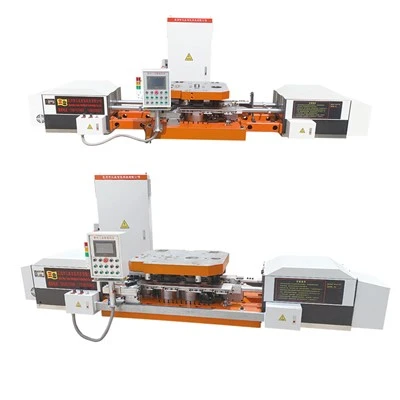
If you’ve ever held a bolt or nut in your hand—whether it’s the one holding together your kitchen cabinet, a bicycle frame, or a heavy-duty construction crane—you’ve held a part made by a nut and bolt manufacturing machine. As someone who’s spent 18 years supplying these machines to factories across North America and parts of Europe, I’ve watched this industry evolve from clunky, hand-operated workbenches to the precision-driven, high-speed systems that turn raw steel wire into finished fasteners in seconds. This isn’t just a story about metal and gears; it’s a story about how manufacturing scaled to meet the world’s growing need for reliable, affordable fasteners, and how innovation turned a manual task into a global industry. Nut Bolt Manufacturing Machine
The origins of nut and bolt manufacturing machines stretch back to the early 19th century, long before assembly lines or mass production was a household term. Before these machines, every nut and bolt was made entirely by hand. A blacksmith would heat a steel rod, hammer one end into a rough thread, and then cut the other end to form a head—for bolts, that meant hammering a square or hexagonal shape; for nuts, cutting a corresponding internal thread into a block of steel. This process was slow, inconsistent, and expensive. A single blacksmith might make just a handful of usable fasteners in a day, and no two were exactly the same. For the small workshops and construction projects of the time, that was manageable, but as railroads expanded across the U.S. and Europe in the 1820s and 1830s, demand exploded. Railroads needed millions of identical bolts to secure rails to ties, and hand-forged fasteners couldn’t keep up.
The first breakthrough came in the 1830s, with the development of the thread-cutting machine. In 1834, an American mechanic named William Sellers designed a machine that could cut external threads on bolts automatically, using a rotating die and a feed mechanism that pushed the steel rod through the die at a precise speed. Sellers, who later founded the American Society of Mechanical Engineers, didn’t just build a prototype—he standardized the thread dimensions, creating a system that made interchangeable bolts possible. Before Sellers, threads varied by region and manufacturer, so a bolt from one shop might not fit a nut from another. That standardization was the backbone of modern fastener manufacturing. A few years later, in the 1840s, inventors adapted Sellers’ thread-cutting design to make internal threads for nuts, and the first fully automated nut and bolt manufacturing machines began to appear in small factories in Pennsylvania and Manchester, England.
These early machines were far from the ones we use today. They were steam-powered, took up entire workshop floors, and still required a skilled operator to feed raw steel, adjust the dies, and inspect every finished part. But they were a game-changer. Where a blacksmith made 10 bolts a day, a single steam-powered machine could make 500, all identical. By the 1860s, during the Civil War, the U.S. military relied on these machines to produce hundreds of thousands of uniform bolts for muskets, cannons, and supply wagons. That demand pushed innovation further: in the 1870s, inventors added cold forging capabilities to the machines, meaning they could shape the bolt head before cutting the thread, rather than hammering it by hand. Cold forging was faster and produced stronger, more consistent parts, and it’s still a core part of nut and bolt manufacturing today.
The biggest shift in the history of these machines came with the rise of the assembly line in the early 20th century. Henry Ford’s Ford Motor Company perfected the moving assembly line in 1913, and almost immediately, nut and bolt manufacturers realized they could apply the same logic to their processes. Before the assembly line, a single machine might make one part of a bolt—say, the thread—and pass it to a different machine to make the head. With assembly line design, manufacturers arranged machines in a sequence, so raw steel wire would move through the entire process: straightening, cutting to length, heading (forming the bolt or nut shape), threading, and finishing, all without being handled by a human operator mid-process. This cut production time for a single bolt from minutes to seconds. By the 1920s, a high-speed automatic nut and bolt machine could produce 2,000 bolts per hour, a staggering leap from the hand-forged era.
The mid-20th century brought two more innovations that transformed the industry: electrical power and computerized control. For almost 100 years, nut and bolt machines had been powered by steam or belt drives connected to a central engine. By the 1950s, compact electric motors became affordable, allowing manufacturers to build smaller, more flexible machines that could be adjusted for different fastener sizes with less downtime. Then, in the 1970s, CNC (Computer Numerical Control) technology was introduced to the industry. CNC nut and bolt machines replaced manual dials and stops with computer programming. Instead of a technician adjusting a die by hand to cut a 10mm bolt, they could input the dimensions into a computer, and the machine would adjust automatically, with a level of precision no human could match. That same decade, cold heading technology improved dramatically too: modern cold forging machines could shape both the head and the thread in a single step, using extreme pressure to form the metal without heating it, which made bolts 30% stronger than hot-forged ones.
Today, nut and bolt manufacturing machines are a far cry from their 19th-century ancestors. The most advanced models I sell to factories run on servo motors, have built-in quality sensors that can detect a flawed thread or a misaligned head in milliseconds, and produce up to 5,000 bolts or nuts per hour. They’re also much more versatile: a single modern machine can switch between making a M6 bolt for a bicycle and a M30 bolt for construction equipment in minutes, with no need for custom tooling or extensive setup time. That versatility is key, because modern fasteners aren’t one-size-fits-all. A bolt used in a wind turbine needs to be corrosion-resistant and able to withstand massive torque; a bolt used in a smartphone needs to be tiny, light, and precision-made to fit into a tight space. These machines can handle all of that, using materials ranging from basic carbon steel to stainless steel, titanium, and even specialized alloys for aerospace applications.
But for all the technology, the core purpose of these machines hasn’t changed in 200 years: to make strong, uniform fasteners that hold the world together. I’ve seen this firsthand in the projects my customers take on. Last year, a customer of mine used the high-speed nut machines I supplied them to produce 2 million stainless steel nuts for a coastal wind farm in Maine. Those nuts will sit under saltwater for 25 years, and they need to be perfectly sized every single time to keep the turbine blades secure in rough Atlantic storms. That’s the kind of reliability that comes from modern manufacturing machines built on 200 years of innovation.

If you’re a factory owner looking to upgrade your existing nut and bolt machines, or you’re a new startup looking to set up a fastener production line, I’ve spent decades building machines that balance speed, precision, and durability. We don’t just sell equipment—we help our customers choose the right machine for their specific needs, whether they’re making small fasteners for consumer electronics or large bolts for heavy construction. If you’re ready to talk about upgrading your production capabilities, feel free to reach out to learn more about our line of nut and bolt manufacturing machines and how we can help you meet your production goals.
Nut Making Machine References
- Hounshell, D. A. (1984). From the American System to Mass Production, 1800-1932: The Development of Manufacturing Technology in the United States. Johns Hopkins University Press.
- Roe, J. W. (1916). English and American Tool Builders. Yale University Press.
- Todd, R. H., Allen, D. K., & Alting, L. (1994). Manufacturing Processes Handbook. Industrial Press.
- National Institute of Standards and Technology. (2004). The History of Standardized Fasteners in American Manufacturing. NIST Technical Note.
Quanzhou Sanye Intelligent Technology Co., Ltd.
As one of the most professional nut bolt manufacturing machine manufacturers and suppliers in China, we have world-leading production equipment and strong manufacturing capabilities. Please rest assured to buy customized nut bolt manufacturing machine made in China here from our factory. Welcome to contact us for quotation.
Address: Anhai Town, Jinjiang City, Fujian Province, China
E-mail: jack_tmm@163.com
WebSite: https://www.qzsymanipulator.com/
