If you’ve ever spent hours Googling “best way to keep my pup from escaping the yard,” you know how overwhelming fence options can get. As someone who’s spent the last 7 years working at a wire mesh fence supplier (yeah, I’m the guy who gets 10 a.m. calls about “my golden retriever just dug under the chain link”), I get why so many pet owners are torn on whether wire mesh fences are actually worth it. Let’s cut through the noise—no fancy marketing jargon, just real talk about what works for pets, what doesn’t, and when a wire mesh fence is your new best friend. Wire Mesh Fence
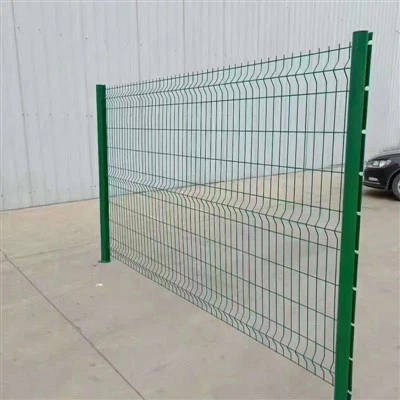
First off, let’s clear up a common myth: all wire mesh fences are the same. Spoiler alert—they’re not. You’ve got welded wire (the kind where the wires are permanently fused at every intersection), chain link (which is woven, not welded), and expanded metal (cut and stretched into a grid). For pets, the material and spacing matter way more than the fence itself. I’ve seen countless customers come in thinking any wire mesh will do, only to end up with a dog that still manages to squeeze through.
Take our welded wire mesh, for example—we stock it in openings as small as 2 inches square. That’s non-negotiable if you’ve got small pets, especially puppies, toy breeds, or even cats. A Chihuahua can slip through a 3-inch opening like it’s nothing, right? I had a customer last month who tried a cheap chain link fence with 4-inch gaps, and her 8-pound terrier was out for a stroll around the neighborhood in 10 minutes flat. Welded wire’s tight, consistent openings fix that because there’s no give—those intersections don’t shift, so even the squirmy little ones can’t escape. For big dogs? Golden retrievers, German shepherds, pit bulls—they’re strong, but a 4-inch welded mesh is solid enough to stop them from pushing through, too. That said, if your dog’s a chewer? We’ve got vinyl-coated welded mesh that’s way less tempting to gnaw than plain metal. I swear, half the calls we get are from owners whose dogs turned their chain link into a giant chew toy, and within a week, the gaps were big enough for a Great Dane’s head.
Now, let’s talk about the big “buts” because wire mesh fences aren’t perfect. The biggest complaint we hear is that some mesh is too flimsy for diggers. A beagle that’s determined to hunt rabbits will dig under almost any fence, wire mesh included—unless you add a “skirt” to the bottom. That’s the part where we bend the bottom 6 inches of the mesh outward, so your pup can’t dig under it. I’ve seen customers skip the skirt because they think it looks ugly, and within 2 weeks, their dog’s found a hole and escaped. Simple fix, but it’s easy to overlook.
Another thing: ventilation. If you’ve got a dog that hates being cooped up in a stuffy yard, chain link or expanded metal might be better than solid wood or vinyl fences. But wait—some welded wire has smaller gaps, so you don’t get as much airflow. For hot climates, we recommend our 2×4-inch welded mesh instead of the 2×2-inch stuff—it’s still safe, but lets more breeze through. Plus, you can see through it, which is huge for separation anxiety. If your dog can’t see you through the fence, they’ll pace, bark, and try to dig their way to you. A wire mesh fence keeps that line of sight open without letting them wander off.
Wait, what about cats? A lot of people forget about feline escape artists. A wire mesh fence with 1.5-inch openings is perfect for keeping cats in, but you’ve gotta make sure it’s tall enough, too. Cats can jump 5 feet easily, so a 6-foot fence is a minimum. We also get requests for “catio” extensions—top sections of wire mesh that angle inward, so even a determined climber can’t get over. I worked with a customer who tried a wooden fence for their two cats, and they were climbing over it in 2 days. Switched to our welded mesh catio, and now the cats just lounge on the porch like they’re supposed to.
Here’s a question I get all the time: are wire mesh fences safe for puppies? Puppies are curious, teething, and way more likely to get stuck than adult dogs. A fence with openings bigger than 3 inches is a disaster waiting to happen—their tiny heads can wedge in, and panic sets in fast. We always tell new puppy owners to go with our 2×2-inch welded wire until their pup’s fully grown. And don’t even get me started on galvanized vs. plain metal—galvanized is coated in zinc to prevent rust, which means no toxic flakes if your pup decides to chew. That’s a non-negotiable for us, because we don’t want any customer dealing with a sick dog (or a vet bill that’ll make you cry).
But let’s be real—wire mesh fences aren’t for everyone. If you’ve got a dog that’s obsessed with chewing through metal? Maybe not. We’ve had customers with power-chewing pit bulls who went through our vinyl-coated mesh in a week. For those guys, we recommend a thicker gauge welded wire—12 gauge or higher—instead of the lighter 16 gauge. It’s a little more expensive, but it lasts way longer, and it’s chew-resistant. Also, if you live in an area with really harsh winters or heavy snow? Make sure the posts are set deep enough—frost heave can tilt the fence, and that creates gaps. We always suggest setting posts 3 feet deep, even if the ground looks solid.
Another common mistake: not considering the height. A 4-foot fence works for Chihuahuas and cats, but a border collie or a basset hound can jump that easily. We sell a lot of 6-foot and 8-foot fences for medium to large dogs. I had a Great Dane owner come in last year who tried a 5-foot fence, and his boy was leaping over it like it was a hurdle. Switched to an 8-foot welded mesh, and no more escape attempts. Also, if your dog is a climber (looking at you, huskies), add a top rail or angled mesh at the top to prevent them from scaling over.
Wait, what about small animals? If you’ve got a yard with chickens or rabbits, a wire mesh fence is way better than a wooden one. It keeps predators out—foxes, raccoons, even coyotes can’t get through the 2-inch mesh. But you’ve gotta bury the bottom 12 inches, not just 6, because predators dig, too. I’ve seen customers bury 6 inches, and a raccoon dug right under and took their whole flock. Bury 12 inches, and that problem’s gone.
So, let’s wrap this up. Are wire mesh fences suitable for pets? The short answer is yes—if you pick the right type, spacing, and add the right extras like skirts or catio tops. They’re durable, see-through, good for ventilation, and way easier to install than some other fence types. But it’s not a one-size-fits-all. If you’ve got a tiny puppy, go for 2×2-inch welded wire. If you’ve got a digger, add that skirt. If you’ve got a jumper, make it tall enough.
I know choosing a fence for your pet feels like a big deal—you want something that keeps them safe, not frustrated, right? If you’re still not sure what fits your pup or cat, hit me up. I can walk you through the different gauges, spacing, and add-ons. No hard sells, just straight up advice from someone who’s dealt with way too many escape stories. We can talk about exactly what your pet needs, no jargon, no pressure.

Wait, one last thing—don’t forget maintenance. Wire mesh is low-effort, but a quick rinse with the hose a couple times a year keeps it looking good. If you do get rust spots, touch ’em up with a wire brush and some rust-resistant paint. It’s not rocket science, and way less work than staining a wooden fence.
High Visibility Screen So yeah, wire mesh fences are totally suitable for pets—you just have to do a little homework to get the right one for your furry friend. No more midnight calls from your neighbor saying “your dog’s in my garden,” no more digging holes in the yard. It’s worth it to get the right setup, trust me.
References
- American Society for the Prevention of Cruelty to Animals. (2022). “Fence Safety for Pets: Choosing the Right Barrier.”
- Humane Society of the United States. (2021). “Preventing Pet Escapes: Fence Design Recommendations.”
- Journal of Veterinary Behavior. (2020). “The Impact of Fence Type on Canine Separation Anxiety.”
- National Agricultural Library. (2019). “Predator-Proof Fencing for Small Livestock.”
Anping County Nuocheng Wire Mesh Co., Ltd.
As one of the most professional wire mesh fence manufacturers and suppliers in China, we also support customized service. Please feel free to buy high quality wire mesh fence for sale here from our factory. For price consultation, contact us.
Address: 100 meters southeast of Beimanzi Village, Dahezhuang Township, Anping County, Hengshui City, Hebei Province, China
E-mail: lixuhao0888@gmail.com
WebSite: https://www.ncwiremesh.com/
