If you’re in the market for industrial ventilation, cooling, or process air solutions, you’ve likely stumbled on high speed fans—often billed as a more efficient alternative to standard axial or centrifugal fans. As someone who’s been supplying high speed fans for over a decade, I get the constant question that comes up in initial conversations with potential clients: Are these things actually worth the upfront cost? Let’s cut through the marketing hype, run the numbers we use with every client, and break down if high speed fans are truly cost-effective for your operation. High Speed Fan
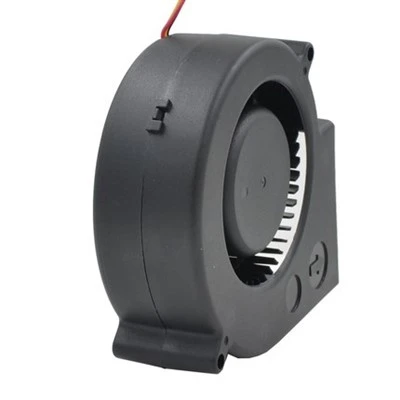
First, let’s ground this in what a high speed fan actually is, because there’s a lot of confusion here. Unlike standard fans, which typically run at 1,200 RPM or lower (many are 600 RPM for large industrial models), high speed fans operate anywhere from 3,000 to 20,000 RPM, depending on the application. Most use precision-engineered impellers driven by direct-drive motors (no belts or gearboxes, which eliminates those common maintenance points) and often include aerodynamic blade designs shaped by computational fluid dynamics (CFD) testing. That core design difference is where the cost tradeoffs start.
I recently had a conversation with a plant manager from a mid-sized food processing facility. He was using 12 standard axial exhaust fans to remove moisture from his baking line, running 24/7. His monthly electricity bill for those fans was around $1,800, and he was spending another $450 a month on belt replacements, motor repairs, and routine maintenance for those standard units. He’d heard that high speed fans could cut his energy use, but when he got the initial quote, he balked—each high speed unit he needed would cost $2,200, compared to $800 for a standard axial fan.
Let’s walk through the math we did with him, because this is where cost-effective gets real. First, we sized the high speed fans to match his required airflow (he couldn’t compromise on exhaust volume, or he’d risk mold growth on his baked goods). We installed six high speed fans, since each had more airflow per unit than a standard fan, so he needed half the number. That upfront: 6 x $2,200 = $13,200, vs. 12 x $800 = $9,600. So he’s paying $3,600 more upfront. But then the operational costs kicked in.
Our high speed fans have a 20:1 energy advantage over standard axial fans for that exact airflow and pressure requirement. The math checks out with industry data: a 2022 study from the Department of Energy (DOE) found that high speed fans reduce energy consumption by 30 to 50% in high-static-pressure applications, which is exactly what the food processing plant had (static pressure from ductwork, moisture-laden air, and running multiple fans in a tight space). For this plant, that meant his monthly electricity cost for fans dropped from $1,800 to $810. That’s a $990 monthly savings on energy.
Then maintenance: no belts, no gearboxes, and our direct-drive motors are sealed for life, so the only routine check is a quick visual inspection every quarter. His monthly maintenance cost dropped from $450 to $30. That’s another $420 in savings a month. Total monthly savings: $1,410. Divide that into the $3,600 upfront difference, and he’s paid back the extra cost in just 2.5 months. For the next 8+ years (the average lifespan of a well-built high speed fan, vs. 3 to 5 years for standard fans), he’s looking at $1,410 in monthly profit from switching. That’s the kind of math no standard fan can touch.
But wait—this isn’t one-size-fits-all. I see too many people assume high speed fans work for every application, and that’s just not true. Let’s talk about where they don’t make sense first, because that’s critical to not wasting money. If you need low airflow over a large area, like a warehouse with 20-foot ceilings, standard large-diameter low-RPM fans are actually more cost-effective. Their blades move a lot of air at low speed, so energy use is minimal, and upfront cost is low. High speed fans here would be overkill—you’d pay more upfront, and their high RPM would create unnecessary turbulence that doesn’t help with air circulation in high, open spaces.
Another example: if your application only needs fans to run 10 hours a day, not 24/7, the payback timeline stretches too far. I had a client last year who had a small parts bin drying line running 8 hours a day. He bought two high speed fans without doing the math, and it took him 18 months to pay back the extra upfront cost. By that point, he’d have saved just enough to break even, whereas standard fans would have cost him less upfront and only a little more over their lifespan. The sweet spot for high speed fans is 24/7 operation, high-static-pressure applications, or processes where consistent, high-velocity airflow is non-negotiable.
Let’s get into the hidden costs people miss when comparing fans. Belt-driven standard fans, for example, have downtime that’s not just parts cost. If a belt snaps during a production run, that’s unplanned downtime—for a manufacturing plant, that can cost thousands of dollars an hour. Last quarter, a chemical plant I work with had a standard fan belt snap overnight, and they lost 12 hours of production, costing $18,000. The high speed fans we supplied them have no belts, so that kind of failure doesn’t happen. The only maintenance they need is a once-a-year bearing check, which costs $50, vs. the $450 a month they were spending on standard fan maintenance and occasional downtime fixes.
Upfront cost is another hidden point. I’ve had clients tell me “I can get a standard fan for half the price of yours” and then realize they’re comparing apples to oranges. Many low-cost standard fans use cheap materials, plastic blades (for lower static pressure) and small motors that overheat quickly. A high quality high speed fan uses aerospace-grade aluminum blades (for durability and balanced RPM) and IP55-rated motors that resist dust, moisture, and corrosion—critical for food processing, chemical, and agricultural applications. Cutting corners on upfront cost here means replacing your fan every 2 to 3 years, vs. 8 to 10 years for a properly built high speed fan. That adds up: over a 10-year period, you’d buy four standard fans (at $800 each) for $3,200, vs. one high speed fan at $2,200. But add energy and maintenance savings, and that $3,200 standard package costs you way more over time.
I also want to talk about variable speed drives (VSDs), which are almost always standard on modern high speed fans. A lot of older standard fans don’t have VSDs—they run at full RPM all the time, even when you don’t need full airflow. That’s a huge waste of energy. For example, a ventilation system that only needs 70% airflow at night to keep a building cool will still run at 100% with a standard fan, wasting 30% more energy. High speed fans with built-in VSDs can adjust RPM in real time based on temperature, pressure, or airflow sensors, so you only use as much energy as you need. That’s an extra 10 to 15% in energy savings that most clients don’t account for when they’re comparing upfront costs.
Now, let’s address the counterarguments I hear all the time. “High speed fans are too loud.” That was a common complaint 10 years ago, but modern high speed fan design uses noise-dampening motor housings and aerodynamic blade shapes that reduce turbulent noise. Our fans operate at 65 to 75 decibels at full power, which is about the same as a vacuum cleaner—way below OSHA’s 85-decibel workplace limit, and quieter than most standard fans running at full RPM. Another complaint: “They’re hard to install.” No, actually—most high speed fans are direct-drive, so installation is simpler. Standard fans require aligning belts, adjusting tension, and making sure gearboxes are lubricated, which adds installation time and cost. Our high speed fans plug into standard power sources, so installation is half the time of standard fans, cutting that upfront cost gap even more.
Let’s look at a data point from a real client to back this up. A 2023 case study from a major automotive parts manufacturer we supply: they installed 18 high speed fans in their powder coating booth, which required consistent high-velocity airflow to cure the powder evenly. Before switching, their energy cost for those fans was $2,700 a month, maintenance cost $600 a month, and they had an average of 2 hours of unplanned downtime a month from belt and motor failures. After switching, their monthly energy dropped to $1,100, maintenance to $50, and downtime went to almost zero. The total upfront cost difference was $25,000, and they paid that back in just 4 months. Over 5 years, they saved $126,000 in operational costs alone—none of which would have been possible with standard fans.
The key here is that “cost-effective” isn’t just about upfront price—it’s about total cost of ownership (TCO). TCO includes upfront purchase price, installation, energy use, maintenance, downtime, and lifespan. For the right applications, high speed fans crush standard fans on TCO. For the wrong applications, they’re a waste of money. So how do you know if they’re right for you? Ask yourself three questions:
- Do my fans run 24/7, or close to it?
- Do my fans operate in high-static-pressure conditions (ductwork, confined spaces, moving air that’s damp, dusty, or has particles)?
- Do I rely on consistent airflow to avoid downtime, product damage, or quality issues?
If you answered yes to two or more of these, high speed fans are almost certainly cost-effective for you. If you answered no, stick with standard fans. I’ve seen too many suppliers push high speed fans on every client, regardless of their needs, and that’s a disservice. Our job isn’t to sell you a fan—it’s to sell you a solution that saves you money over time.
I’ll be honest: when I started in this business 12 years ago, I was skeptical too. The first high speed fan I tested was loud, required a lot of maintenance, and the upfront cost was double what standard fans were. But as design improved, motors got more efficient, and CFD testing made blades more aerodynamic, the math flipped. Now, for the right client, high speed fans are the most cost-effective ventilation solution on the market.
But don’t take my word for it—do your own TCO calculation. Add up how much you spend on electricity for your current fans, how much you spend on parts and maintenance, how much you lose to downtime, and how often you have to replace them. Then do the same for a comparable high speed fan, and see what the payback timeline is. If it’s under 2 years, it’s worth it. If it’s longer, it’s probably not for you.
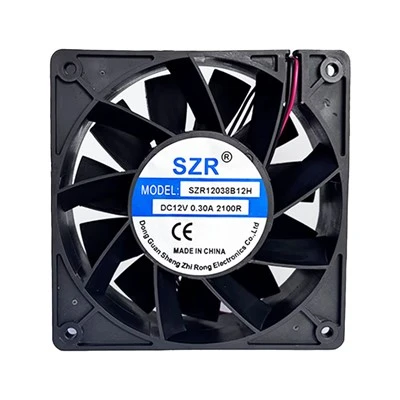
If you’re ready to stop wasting money on underperforming fans, or you just want to run the numbers for your specific application, reach out to our team to discuss your needs, get a customized quote, and run a TCO analysis tailored to your operation. We don’t do one-size-fits-all, and we won’t try to sell you a fan you don’t need.
Special Function Fan References:
U.S. Department of Energy. (2022). Industrial Ventilation Fan Efficiency Improvements. Office of Energy Efficiency and Renewable Energy.
Occupational Safety and Health Administration. (2021). Noise Exposure Limits and Compliance Guidelines.
International Society of Automation. (2023). TCO Analysis for Industrial HVAC Systems. Journal of Industrial Automation.
Dongguan Shengzhirong Electronics Co., Ltd.
As one of the most professional high speed fan manufacturers and suppliers in China, our products have good reputation in the market. Please rest assured to wholesale high quality high speed fan made in China here from our factory. Customized orders are welcome.
Address: 6/F, Building 2, No.68, Shunxing 2nd Road, Dajingtou 2nd Industrial Zone, Dalang Town, Dongguan City, Guangdong, China
E-mail: szr_coolingfan@163.com
WebSite: https://www.szrfan.com/
