When you’re out there trying to pick a slitting machine, it’s easy to get overwhelmed. I’ve been selling slitting machines for almost a decade now, and I’ve seen so many folks make the same mistakes—chasing the cheapest option or the flashiest model without actually thinking about what their business truly needs. Let me break this down like I would with a new customer who just walked into my shop, no fancy jargon, no pushy sales pitch (promise). Slitting Machine
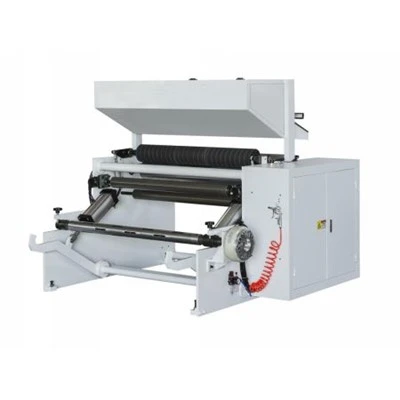
First off, let’s talk about what you’re actually slitting. Sounds silly, right? But this is the foundation of everything. I once had a guy come to me looking for a slitter, swearing he needed a “heavy-duty industrial model,” only to find out he was slitting thin plastic wrap for food packaging. That heavy-duty machine would’ve been like using a bulldozer to fix a bike flat—total overkill, and he would’ve wasted thousands of dollars. So, what materials are you working with? Are they thin films (like plastic, aluminum foil, or paper), thicker textiles, metal coils, or maybe something specialty like tape or fabric? Each material acts differently when slit—thin stuff needs a smooth, controlled tension system, while thicker or stiffer materials need more power to get a clean cut.
Next up, the width and thickness of your stock. Let’s get specific here, because this is another big one. If you’re slitting a 60-inch wide roll of steel that’s 1/4-inch thick, you can’t use a machine built for 10-inch wide plastic film. The machine’s maximum roll width and maximum material thickness are non-negotiable specs here. But wait—don’t just go by your current stock. Think about future growth. If you’re a small business now that’s planning to expand into wider rolls in the next couple of years, don’t buy a machine that only handles 30-inch widths. It’s cheaper to step up a little now than to replace the whole slitter in two years.
Then there’s the slitting method. Most people I talk to have no idea there are different ways to slit material, so I walk them through this simply. There’s circular slitting—this is the most common, using rotating blades to cut through the material. Good for most materials, from paper to thin metal. Then there’s shear slitting, which uses two blades that mesh together (like scissors) for cleaner cuts on thicker, stiffer materials. And razor slitting, which uses a single sharp blade—perfect for super thin films, because it doesn’t crush the material like circular blades can. If you’re slitting delicate stuff like insulation film, razor slitting is probably your best bet; if you’re doing heavy aluminum coils, shear slitting is the way to go. I’ve had customers who didn’t get this right end up with frayed edges or uneven cuts, which ruined their whole batch of product. Not fun, and totally avoidable.
Now, let’s talk about quality of cut and precision. This isn’t just about getting a straight line—this matters for your end product. If you’re making labels, for example, the slits have to be exactly the right width, because if they’re off even a hair, the labels won’t fit on their packaging. Or if you’re slitting fabric for apparel, uneven edges mean sewing issues later. So, what kind of tolerance does your business need? Most standard slitters can handle +/- 0.005 inches, but some specialty models go tighter—like +/- 0.001 inches—for high-precision work. Ask any machine vendor, and they should tell you their tolerance rating, but also ask for actual samples. If you can, bring in a sample of what you’re slitting, and the vendor (that’s me, by the way) can run a test slit for you so you can see the quality for yourself. No one should buy a slitter without seeing a test run, period.
Tension control is another huge, underrated part. When you’re rolling material through a slitter, if the tension is too loose, the material will wrinkle or bunch up. If it’s too tight, it can stretch or even break. For thin, stretchy materials like plastic film, tension control is critical. Some cheaper slitters have basic tension control that works for simple jobs, but if you’re dealing with sensitive or stretchy stuff, you need a machine with automatic tension control. That way, it adjusts on the fly as the roll gets smaller (because as you use more material, the tension can change) and keeps everything consistent. I’ve had customers save months of wasted material just by upgrading to a slitter with good tension control—small feature, huge impact.
Speed. Yeah, speed matters, but not in the way you might think. A slitter that runs at 1,000 feet per minute sounds awesome, but if your material can’t handle that speed, you’re just going to get messy cuts. Also, if you’re a small business with low-volume runs, a super fast machine is overkill and more expensive to operate. But if you’re running high-volume 24/7, you need a machine that can keep up without breaking down. Think about your production volume—how many feet of material do you slit in a day, a week, a month? A good vendor will help you match speed to your actual needs, not just sell you the fastest one on the shelf.
Durability and maintenance. Slitters are workhorses—they’re running constantly, often in noisy, dusty environments. You don’t want a machine that breaks down every other week. So, what’s it made of? Heavy-duty steel frames are better than light aluminum, because they don’t vibrate as much, which leads to cleaner cuts. Also, ask about maintenance. Do the parts need frequent oiling? Are the blades easy to sharpen or replace? Some cheap slitters have blades that are impossible to replace without calling a technician, which costs you time and money. My slitters come with easy-to-replace blades, and I send out quick maintenance tips via email—no one wants to be stuck waiting for a part at 2 a.m. before a big order deadline.
Space and setup. I can’t tell you how many times a customer bought a slitter and realized it won’t fit in their shop. Measure twice, buy once, right? Slitters take up space—there’s the main unit, plus room for the rolls to feed in and the slit rolls to come out. Also, do you have the power? Heavy-duty slitters need more electricity than small ones, so check your electrical setup before you commit. A good vendor will help you figure out the space and power requirements, but it’s on you to know your shop’s layout.
Cost. Okay, let’s get real—money matters. But here’s the thing: the cheapest slitter isn’t always the best. I’ve seen customers save a few thousand bucks upfront, only to spend tens of thousands on repairs and wasted material in the first year. You need to balance upfront cost with long-term value. Ask about warranties—what’s covered, for how long. Do they offer training? When we sell a slitter, I don’t just drop it off and leave the customer to figure it out. I send a tech to train their team for a couple days, because even the best machine is useless if no one knows how to run it right. That’s part of the cost, and it’s worth every penny.
Wait, one more thing—support. This is the biggest one, in my opinion. If your slitter breaks at 7 p.m. on a Friday, you don’t want to have to wait until Monday to get it fixed. You need a vendor who’s responsive, who has local technicians (or at least a way to get parts fast), and who actually knows slitting machines, not just sales numbers. I’m available to my customers 6 days a week, and if they have an emergency, I’ll do whatever I can to help—because I want them to come back, not just buy one machine and ghost me.
Let me wrap this up with a quick recap so you don’t forget anything: 1) Know your material, width, thickness. 2) Pick the right slitting method for your job. 3) Nail down precision and tension control. 4) Match speed to your volume. 5) Check durability and maintenance ease. 6) Measure your space and confirm power. 7) Don’t forget support and warranties.
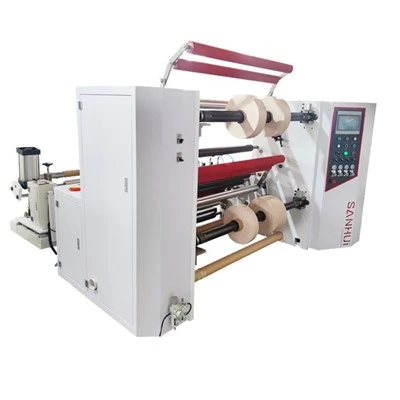
If you’re still unsure, don’t guess. Bring over a sample of what you’re slitting, or tell me exactly what you’re working with, and I can walk you through the best options. No pressure, no weird sales tactics—just honest advice from someone who’s been in this game for years and wants you to get a slitter that works for your business, not mine. Reach out if you’re ready to chat about your needs—we can set up a test run, go over specs, and figure out the perfect fit. It’s better to get it right the first time than to end up with a machine that’s collecting dust in your warehouse.
References
Rewinding Machine Slitting Technology: A Practical Guide for Converting Industries, Converters Technical Association, 2021
Industrial Slitting Machines: Selection, Operation, and Maintenance, Machinery Handbook, 32nd Edition, 2022
Material Handling for Roll Processing, Material Handling Industry Association, 2020
Wenzhou Sanhui Machinery Manufacturing Co., Ltd.
Wenzhou Sanhui Machinery Manufacturing Co., Ltd. is one of the most professional slitting machine manufacturers and suppliers in China. We have world-leading production equipment and strong manufacturing capabilities. Please feel free to wholesale advanced slitting machine made in China here from our factory. Customized orders are welcome.
Address: B17-8, Mechanical Industry Park, Wanquan Light Industry Production Base, Wanquan Town, Pingyang County, Wenzhou City, Zhejiang Province
E-mail: sanhui.slittingmachine@gmail.com
WebSite: https://www.sanhuislittingmachine.com/
