Hey there, welcome to our little corner of the internet! If you’ve ever stared at a small, flat metal (or sometimes plastic) plate on a machine, a piece of equipment, or even a bike and thought, “Wait, what’s all the tiny writing on that thing for?” — you’re not alone. Most people just glance at an ID plate, maybe see a brand name, and move on. But if you’re someone who sources parts, runs a workshop, or builds anything that needs to last, that little plate is actually a goldmine of info. And since we’ve been making ID plates for over a decade (shoutout to our team who’s seen every weird request from factories to food trucks), let’s break down exactly what’s on there, why it matters, and how to make sure you’re reading it right. ID Plates

First off, let’s get one thing straight: not all ID plates are the same. A plate on a commercial air compressor is going to have totally different info than one on a custom-engraved camping cooler, right? But the core stuff that every functional ID plate (the kind we make for industrial, commercial, and automotive clients) has is universal. Let’s start with the basics that you’ll see on 99% of ID plates out there.
First up: the manufacturer’s name and logo. That’s the obvious one, right? But wait — it’s not just for branding. That little logo tells you who’s responsible for the product. If something goes wrong, or you need a replacement part, or you just need to confirm you didn’t buy a knockoff, that logo is your first stop. I’ve had so many clients come to us panicking because their machine’s original ID plate got scuffed off by a forklift, and they needed to order a new one — the first thing we ask them is, “What was the brand on the old plate?” and that cuts their guesswork in half. We make sure every plate we produce has that crisp, clear logo, no blurry edges, because if that logo’s unreadable, the whole plate is basically useless.
Next, the product or model number. This is way more important than most people realize. Let’s say you have a 2018 commercial washing machine and you need a new pump. If you just tell the repair guy “it’s the front-loader from the laundromat,” he’ll give you the wrong pump. But if you hand him the ID plate and point to that model number, boom — he has the exact part number (which is usually right next to the model number, too) in two seconds flat. Model numbers aren’t random, by the way. A lot of brands structure them to tell you something too — like what series it is, what year it was made, even what size or capacity it has. We always engrave model numbers in a bold, large enough font so you don’t need a magnifying glass to read it, especially for industrial plates that get bolted to machinery where the light is bad half the time.
Then there’s serial number. Oh, serial numbers are the unsung heroes of ID plates. This is unique to every single unit of that product, right? No two serial numbers are the same. Why does that matter? Let’s think: warranties. If your air conditioner stops working 6 months after you installed it, you’ll need the serial number to prove when you bought it (or when it was manufactured) to file a claim. Also, if there’s a product recall — remember that car battery recall a few years back? They used serial numbers to track exactly which batches were faulty and which units were affected. Without the serial number on the ID plate, you’d have no way to confirm if your particular unit is part of that recall. We engrave serial numbers in sequential order for bulk orders, and we make sure they’re resistant to fading or scratching — we use laser engraving or durable vinyl coating, depending on what the client needs, because a serial number that wears off is basically a waste of space on the plate.
Now, the technical specs. This is the stuff that gets most people confused, but it’s the most critical if you’re using the product for work. Let’s take a power tool, for example. The ID plate will have things like voltage, current, wattage, or horsepower. For a commercial appliance, it’ll have amperage, frequency (like 60Hz for North America, 50Hz for Europe — that’s a big one, plug a 120V 60Hz machine into a 240V 50Hz outlet and you’ll fry it). For hydraulic equipment, you’ll see pressure ratings (like PSI or bar) that tell you how much force the machine can handle. For things like storage tanks, you’ll have capacity in gallons or liters, and material type (like stainless steel or carbon steel). We get a lot of small business owners who come to us with a custom machine they built in their garage, and they have no clue what specs to put on the ID plate — we walk them through it, because getting the specs right isn’t just a formality; it’s a safety thing. If the ID plate says the maximum pressure is 100 PSI and you run it at 150, you’re looking at a really bad accident.
Wait, let’s not forget regulatory and safety info. That’s the stuff that’s required by law for a lot of products, and it’s non-negotiable. For example, in the US, the FCC requires ID plates on any electronic device that emits radio waves — that’s your Wi-Fi router, your garage door opener, even your kids’ toy with a remote. You’ll see an FCC logo there, or a CE mark if it’s being sold in Europe (wait, CE is Conformité Européenne, right? It means it meets EU safety, health, and environmental requirements). Then there’s OSHA stuff for industrial equipment — OSHA requires certain plates on heavy machinery to warn operators about risks, like “max load 5000 lbs” or “keep hands clear of moving parts.” We work with a lot of contractors who need ID plates that meet OSHA standards, so we make sure to include those warning labels and regulatory marks exactly as required, no cutting corners.
Oh, and date of manufacture! That’s another big one. A lot of people don’t think about this, but if you have a machine that’s supposed to last 10 years, knowing when it was made helps you plan for maintenance or replacement. For example, if your industrial compressor was made in 2015 and that model had a known part issue starting in 2022, you can check the date on the ID plate to see if your unit is affected. We usually add the date in a small, easy-to-read spot, often as a 4-digit number like MM/YYYY or YY/MM, so it doesn’t clutter up the plate but it’s there when you need it.
Wait, are there any extra things that can be on an ID plate? Absolutely, depending on what the client needs. We do a lot of custom ID plates for small businesses, like food trucks that need health department permits on their plates — health inspectors need to see that permit number right there on the exterior of the truck, so it’s engraved or printed on the ID plate. For bike manufacturers, we put the frame number on the ID plate, or for boat owners, the hull identification number (HIN) — that’s required by the US Coast Guard, so it has to be on a permanent plate on the boat. Even for things like custom furniture, we do ID plates with the craftsman’s mark, so each piece has a little signature of who made it.
Now, let’s talk about common mistakes we see people make with ID plates, because we see them all the time. First, they put the plate in a spot that gets damaged. Like, on the side of a machine that’s always getting banged by forklifts, or under a piece of equipment where it’s impossible to see. We always advise clients to mount ID plates in a visible, protected spot — not too high that you need a ladder, not too low that it’s covered in dirt or grime. Second, they use a cheap plate that wears off. We’ve had clients come back to us a year later because their original ID plate was made of thin plastic that faded in the sun, or aluminum that got scratched off. We use materials like stainless steel, anodized aluminum, or heavy-duty PVC for outdoor use, so our plates last for years, even in harsh conditions — we’ve had plates on oil rigs out in the Gulf of Mexico that are still readable after 15 years. Third, they skip engraving the exact info. I know a small shop owner who had a custom table built, and the ID plate only had his business name, no model number or serial number. A year later, he needed to reorder a custom leg, and he had no way to prove what size it was — he lost a ton of money that day. Always make sure every bit of info you need is on the plate, even if you think you’ll never use it.
If you’re reading this and you’re someone who needs ID plates for your business, let’s be real — you don’t just need a pretty plate. You need a plate that’s going to last, that has all the right info, that meets any regulatory standards, and that’s easy to read. We’ve worked with everyone from tiny coffee shops with one espresso machine to Fortune 500 factories with hundreds of pieces of equipment, and we tailor every plate to exactly what they need. No one-size-fits-all garbage here — if you need extra specs, a custom logo, warning marks, whatever, we can do it.
Wait, one last thing to mention: ID plates aren’t just for big industrial stuff. We do custom ID plates for pet products too — like custom dog crates with the owner’s name and contact info, or for racing bikes with the rider’s number. It’s all about getting the right info in a durable, visible spot.
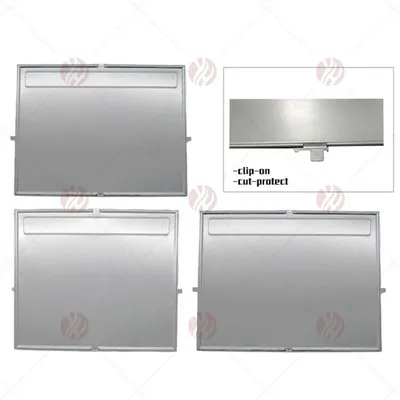
If you’re tired of ID plates that fade, scratch, or don’t have all the info you need, hit us up. Whether you need 10 plates for your food truck or 10,000 for a new line of appliances, we can hook you up. Shoot us a message to chat through what you need, no pressure, no salesy garbage — just straight up help getting the right ID plates for your gear.
IBC Components References:
- Occupational Safety and Health Administration (OSHA). "Machine Guarding Requirements for General Industry." 29 CFR 1910.212, 2024.
- Federal Communications Commission (FCC). "Labeling Requirements for RF Devices." Part 15 Subpart J, 2023.
- National Marine Manufacturers Association (NMMA). "Hull Identification Number (HIN) Standards." 2022.
- International Organization for Standardization (ISO). "Technical Product Documentation – Identification Plates for Industrial Machinery." ISO 7000, 2021.
Zhenjiang Yuanhai Packaging Co., Ltd.
We’re well-known as one of the leading id plates manufacturers and suppliers in China, featured by quality products and good price. Please rest assured to buy high-grade id plates for sale here from our factory. We also accept customized orders.
Address: No. 9, Danwu Road, Dantu District, Zhenjiang City
E-mail: chin_john@msn.com
WebSite: https://www.yhibc.com/
