Hey there, if you’re running heavy machinery, you already know a gear pump is the unsung hero keeping your hydraulic system (or lube, fuel, whatever fluid you’re pushing) from seizing up. As a gear pump supplier, I’ve seen way too many folks wait until their pump starts leaking or making weird racket to do maintenance—and that’s a mistake that costs you downtime, not to mention cash. The key to keeping your pump chugging along? Regular checks on the right parts, no fluff, no overcomplicating it. Let’s break down exactly what you should be looking at, how often, and why it matters. First, keep in mind “regular” depends on your application: if you’re running a pump in a construction site 24/7 digging dirt, check twice as often as a food processing plant pump running 8 hours a day on clean syrup. Got it? Cool, let’s dive in. Gear Pump
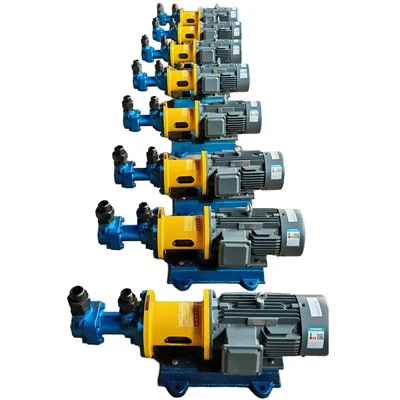
First up: the gear teeth themselves. This is the heart of the pump, so it’s non-negotiable. Let me tell you, I’ve had customers come to me with a pump that’s been screaming for 6 months because their gear teeth were chipped and worn. How do you check? First, shut off the system, relieve all pressure (super important—don’t skip that, a blast of high fluid will knock you on your ass), then take the pump cover off if it’s a cartridge-style, or pull the gear set out. Look for three main things: pitting, scoring, and wear on the tooth faces. Pitting is those tiny little craters from fluid cavitation (when air bubbles pop and erode metal)—if you can feel them with your fingernail, that’s already past the “minor issue” stage. Scoring is those deep scratches that run along the tooth, usually from debris in the fluid; if they’re long enough to catch, they’ll make the pump lose pressure over time. And wear: measure the backlash between the gears (the gap where they mesh) with a feeler gauge. Most standard gear pumps have a backlash spec of like 0.001 to 0.003 inches—if it’s more than that, fluid is sneaking back between the teeth instead of getting pushed through the system, and your efficiency drops. We see this all the time with pumps moving dirty hydraulic fluid—people skip filtering, and the gears take a beating. Pro tip: if you replace one gear, replace both—they’re precision-machined to mesh together, mismatched gears will just wear faster.
Next, the shaft seals and gaskets. This is where most small issues turn into big messes. Shaft seals (we call them lip seals in the biz) are what keep fluid from leaking out where the shaft sticks out of the pump housing, right? And gaskets seal the end covers and ports. Here’s the thing: seals don’t last forever. Even if they look fine, they can get hard or cracked from heat or age, even if the pump hasn’t run much. Check for seepage first—you might see a tiny drip, especially when the pump starts up, that’s the seal going. If you ignore it, that drip turns into a stream, and you’re losing fluid, plus exposing the pump internals to dirt. Gaskets: if you take the end cover off, look for crushed or torn gasket material around the edges. A bad gasket will let air get into the pump, causing cavitation (remember that from the gears? It’s a double whammy). Also, don’t reuse gaskets—even if they look good, compressed gaskets lose their sealing ability. That’s a rookie move, and I’ve heard so many guys say “it worked fine last time” only to have a leak within an hour.
Then there’s the pressure relief valve. Wait, that’s a part most people forget is part of the gear pump, not just a separate component. The pressure relief valve is the safety thing that stops the pump from building too much pressure and blowing up hoses or the pump itself. How often to check? Every 3 months for high-pressure apps, every 6 for low-pressure. What to look for: if the relief valve is stuck open, your pump will have low pressure; stuck closed, and you’ll get a pressure spike that can break seals or gears. Test it: run the pump, block the outlet (careful—make sure the system’s rated for that pressure), the relief valve should pop open at the specified pressure (check your pump’s manual, don’t guess). If it doesn’t, take it apart and clean it—debris gets stuck in there all the time. Also, make sure the spring isn’t corroded or weak; a weak spring will open too early, wasting energy. As your gear pump supplier, we tell all new customers to replace relief valves every couple years if they’re running in harsh conditions—way cheaper than replacing a whole pump.
The pump housing and bushing. Wait, bushings are those little bearings that the gears spin on, right? Sometimes they’re inside the housing, sometimes on the gears. Check the housing first for wear at the points where the gears ride—if the housing is scored or grooved from the gears moving, that’s bad. The bushings: measure the clearance between the gear shaft and the bushing. If the clearance is too big, the gear will wobble, causing noise and pressure loss. For most external gear pumps, that clearance is like 0.002 to 0.005 inches—again, check your spec, don’t go by feel. I’ve had a customer who ran a pump on fuel with tiny contaminants, and the bushings wore out in 4 months. He tried to just run it with more pressure, but that made the gear teeth chip. Moral of the story: don’t skip the bushings. They’re cheap to replace, way cheaper than fixing a broken gear set.
Wait, let’s not forget the fluid itself. A lot of people think fluid is just “something to push” but it’s critical for the pump’s health. Check the fluid’s cleanliness, viscosity, and moisture content every time you do a pump check. If the fluid is dirty (water or metal shavings), that’s the number one cause of all the parts issues we talked about. I always tell customers: if you can’t see the bottom of your fluid reservoir clearly, it’s too dirty. Viscosity: if the fluid is too thin (like watered down), it won’t lubricate the gears and seals, leading to wear. Too thick, and the pump has to work harder, wasting energy. Moisture is a big one—water in hydraulic fluid causes rust on metal parts, which leads to pitting on gear teeth. We sell filter kits for our gear pumps specifically because so many guys forget to change filters, which lets debris get into the pump. A $20 filter change is nothing compared to a $500 gear replacement.
Also, the mounting and alignment. Wait, is that part of the pump? Well, if your pump is misaligned with the motor, it’s going to wear out way faster than it should. Every 6 months (or after any maintenance on the motor), check the alignment of the pump shaft and motor shaft with a dial indicator. If they’re off, you’ll get excessive vibration, which wears out seals and bushings. I’ve seen a pump run for 2 years with bad alignment—when they fixed it, the noise went away, and the seal leaks stopped. It’s a simple check, no fancy tools needed if you’re careful. Just make sure the couplings (the thing connecting the pump and motor) aren’t worn or cracked either. A cracked coupling will cause vibration too, so replace couplings every time you replace a seal—they’re paired, trust me.
Now, let’s get real—how often should you do all these checks? Like I said earlier, it’s not one-size-fits-all. If your pump is in a continuous-duty app (construction, mining, agriculture), do a quick visual check every week, and a deeper dive (gear teeth, backlash, seal condition) every 3 months. If it’s intermittent (food processing, HVAC, where it runs 8-12 hours a day), visual check every 2 weeks, deep check every 6 months. If it’s a standby pump (like for emergency power), check it once a year, and run it for 30 minutes to make sure it’s not seized up. I can’t tell you how many times a customer’s standby pump seized when they needed it, just because no one checked the shaft rust or seal dryness.
Wait, let’s address some common myths. A lot of guys think gear pumps don’t need maintenance because they’re “simple.” No way. They’re precision-made, moving parts, so they need care. Another myth: “if it’s not leaking, it’s fine.” Leaks are usually the last sign—by then, the seal is already worn, and the bushing might be too. Catching seepage early saves you money. And don’t buy cheap replacement parts! As a gear pump supplier, I see guys buying $10 seals instead of $20 OEM ones, and those cheap seals crack in a month. OEM parts are made to fit your specific pump, so they last longer and work better.
Let me throw in a quick story to drive this home. A customer of mine was running a gear pump on a conveyor system in a warehouse. He waited 2 years to do any maintenance, and when he finally took it apart, the gear teeth had so much pitting they looked like golf balls, the shaft seals were so hard they crumbled when he touched them, and the relief valve was stuck open. He ended up replacing the whole pump, which cost him $1,500, plus 2 days of downtime where the conveyor was out, costing him way more in lost shipments. If he had done a deep check every 6 months, he would have replaced the seals for $50 and avoided the whole mess. That’s the kind of thing I see all the time, so I’m glad to get this out there.
So, to wrap this up: the key parts to check regularly are gear teeth, shaft seals and gaskets, pressure relief valve, bushings and housing, fluid quality, and mounting/alignment. Don’t skip any of these, and match your check frequency to your application. If you’re not sure what specs your specific gear pump needs, or you need replacement parts, reach out. We’re here to help, not just sell you a pump—we’ve been working with all kinds of industries, so we know what works for construction, food, agriculture, whatever you’re in.
Wait, one last tip: keep a maintenance log. Write down when you checked each part, what you found, and what you replaced. That way, you can spot patterns—like if your seals always fail after 5 months, maybe the fluid is too hot, so you can add a cooler instead of just replacing seals every time. It’s a small thing, but it makes a big difference long-term.
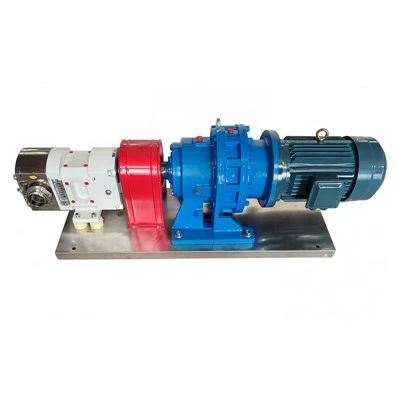
Now, if you’re having issues with your gear pump, or you need a new one, or replacement parts, don’t hesitate to get in touch. We can walk you through what checks to do, what parts you might need, and get you set up with reliable gear pumps that are built to last.
Gear Pump References:
- Hydraulic Pump Maintenance Handbook, Fluid Power Society, 2021
- Gear Pump Design and Application Guide, National Fluid Power Association, 2022
- Industrial Machinery Maintenance Best Practices, American Society of Mechanical Engineers, 2020
- Pump Seal and Gasket Durability Standards, International Organization for Standardization, 2019
Botou Hengyang Pump & Valve Co., Ltd.
With abundant experience, we are one of the most professional gear pump manufacturers and suppliers in China. Please feel free to buy high standard gear pump made in China here and get pricelist from our factory. All customized pumps are with high quality and competitive price.
Address: No. 159, Road 1, Development Zone, Botou City, Cangzhou, Hebei Province, China
E-mail: bthdbf@163.com
WebSite: https://www.hyoilp.com/
