Hey there, if you’ve ever worked with composite parts—whether in aerospace, automotive, marine, or even industrial tooling—you’ve probably heard the term “prepreg” thrown around a lot. But let’s cut to the chase: one of the biggest headaches I hear from folks who are new to composites (or even some veterans who’ve switched materials lately) is not knowing how prepreg holds up to different chemicals. As a prepreg supplier who’s been talking to factories, R&D teams, and small-batch builders for over a decade, I can tell you this isn’t a one-size-fits-all answer. It’s way more nuanced than just “resists chemicals” or “doesn’t resist chemicals.” Let’s break this down like we’re geeking out over a project in our back shop, no stuffy lab jargon that makes your eyes glaze over. Prepreg

First, let’s make sure we’re on the same page about what prepreg actually is, because a lot of newer folks mix this up with wet layup. Prepreg is short for “pre-impregnated” composite fibers—think carbon fiber, glass fiber, or aramid (like Kevlar) that’s already soaked in a partially cured epoxy resin, wrapped in a protective film, and frozen until you’re ready to lay it up. Unlike wet layup, where you mix resin and hardener on-site, prepreg takes all the guesswork out of resin application. That pre-impregnated resin is the key to its chemical resistance, and not all resins are created equal here.
Wait, right—when I say “resin,” I’m not talking about the cheap stuff you find in craft stores. Most industrial prepregs use epoxy resin, but even epoxies have different formulations. Some are “general purpose” for low-stress parts, others are high-temperature epoxies for jet engine components, and a few even have chemical-resistant additives for things like chemical tanks or pipelines. That’s the first big variable that dictates chemical resistance: what resin system is your prepreg using, and how did you cure it?
Let’s start with the most common chemicals people ask about, because these are the ones that tend to cause the most issues. First, acids. Most standard epoxy prepregs—your go-to for drone frames, car parts, or surfboards—handle mild acids pretty well. Lemon juice, vinegar, weak solutions of fertilizer, even dilute sulfuric acid for short periods? They won’t eat through the part. But crank that acid up to concentrated hydrochloric acid or nitric acid? That’s a different story. I’ve seen a client bring in a test part made with standard carbon prepreg, left in concentrated acid for a week, and it turned powdery—resin broke down completely, fibers fell apart. Now, if they’d used a chemical-resistant epoxy prepreg, specifically formulated for exposure to acids, that part would’ve held up way better. Those have additives that cross-link tighter with the fibers, so acids can’t penetrate as easily.
Then there’s bases. Strong bases, like sodium hydroxide (lye) or potassium hydroxide, are actually way harsher on most epoxies than acids. I’ve seen a lab test where a standard epoxy prepreg part was submerged in 10% lye solution for 72 hours, and the resin started blistering and peeling off the carbon fibers. Mild bases, like those in most household cleaners or soap solutions, are fine—no problem there. Again, it comes down to resin: specialty chemical-resistant prepregs use bisphenol F or novolac epoxy systems, which are way more resistant to alkaline solutions than standard bisphenol A epoxies. That’s a huge difference for industrial users, like companies making parts for water treatment plants or industrial cleaning equipment.
What about solvents? This is where a lot of people get tripped up, because solvents don’t just “attack” resin—they can cause the resin to swell, which leads to micro-cracks that let more chemicals get in later. Acetone, for example: most standard epoxy prepregs handle small amounts of acetone, like wiping a tool down after layup, but leave a part submerged in pure acetone for a month, and the resin will soften, lose its structural strength, and turn gummy. That’s why we always tell folks: don’t use acetone to clean a cured prepreg part unless you’re using a high-temperature, solvent-resistant epoxy prepreg. Then there’s stronger solvents, like methyl ethyl ketone (MEK) or toluene—those are way worse. I had a client in the paint industry once who tried to use standard prepreg for a paint booth liner, and the solvent fumes from their paint thinner broke down the resin in 6 months. They switched to our solvent-resistant prepreg, and that liner’s still going strong 3 years later.
Now, let’s talk about the variables that most people overlook when testing prepreg’s chemical resistance. It’s not just what chemical you use—it’s how long, at what temperature, and how the part was cured. Curing temperature is a big one. If you cure a standard epoxy prepreg at 250°F for 2 hours, vs. 300°F for 4 hours, that extra heat makes the resin cross-link (the chemical bonds that hold it together) way tighter. Tighter cross-links mean chemicals can’t seep between the resin molecules as easily. I once had a guy test two identical prepreg parts, one cured at low temp, one at high, and the low-temp one failed 3x faster in a saltwater soak than the high-temp one. That’s a quick win for anyone looking to boost chemical resistance without switching materials.
Saltwater is another super common chemical exposure—marine parts, boat hulls, offshore equipment. Standard epoxy prepreg actually holds up pretty well to saltwater, but there’s a catch: saltwater with high temperatures. If you’re making a part that’s going to be submerged in 100°F saltwater year-round, standard prepreg will be fine, but if it’s 150°F (like near a power plant’s cooling outflow), you’ll want a high-temperature epoxy with saltwater resistance additives. I’ve seen parts start to delaminate after 18 months in warm saltwater, and the only difference was they used a general-purpose prepreg instead of a marine-grade one.
Wait, what about other composite fibers? Because prepreg isn’t just carbon fiber. Glass fiber prepreg is a thing, right? E-glass prepreg is super common, and its chemical resistance is different from carbon. E-glass handles acids and bases pretty well, but aramid (Kevlar) prepreg? That’s a whole other story. Kevlar doesn’t do well with strong acids or bases at all—concentrated sulfuric acid will dissolve Kevlar fibers, so if you’re making a part with Kevlar prepreg, you have to make sure the resin is the chemical barrier, not the fiber. That’s a mistake a lot of first-timers make: they pick the fiber for strength, not considering how the fiber itself reacts to chemicals.
Now, let’s talk about real-world vs. lab testing. A lot of clients come to us with a lab test result that says their prepreg has “excellent chemical resistance,” but when they use it in their actual application, it fails. Why? Because lab tests use pure chemicals, constant temperature, and no mechanical stress. Your part? It’s probably under tension, or vibration, or temperature swings. That mechanical stress plus chemical exposure is a recipe for micro-cracks, which accelerate degradation. I always tell clients: if you’re making a part that will see both stress and chemicals, talk to us about how to pair prepreg with a protective surface coat—like a polyurethane topcoat or a chemical-resistant gel coat. That adds an extra layer of defense, no extra hassle.
So, what’s the takeaway here? Prepreg’s chemical resistance isn’t a fixed number—it’s a combo of three things: the resin system, the fiber type, and how you cure and use the part. General purpose is great for low-exposure, low-stress parts, but if you’re dealing with harsh chemicals, warm temperatures, or mechanical stress, you need to pick the right prepreg. Don’t just go by what the label says—ask questions.
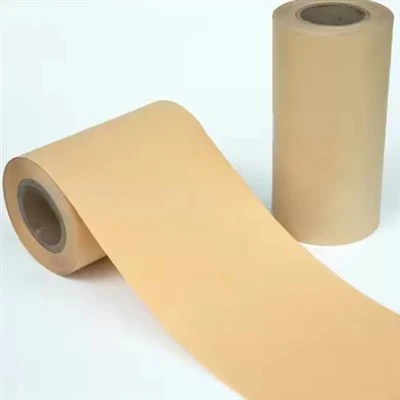
If you’re not sure what prepreg is right for your project, whether it’s a small prototype or a full production run, don’t guess. Reach out to us to chat through your application, the chemicals it will be exposed to, temperature and stress factors, and we’ll point you to the prepreg that will hold up. We’re not just here to sell you a roll of prepreg—we’re here to make sure your part works, no surprises down the line.
Carbon Fiber Flexibility References:
- Composite Materials Handbook Volume 3: Chemical Resistance of Fiber-Reinforced Polymers. Society of Plastics Engineers, 2018.
- Bishop, M.T. "Chemical Durability of Epoxy Prepregs for Industrial Applications." Journal of Composite Materials, vol. 52, no. 12, 2018, pp. 1659-1674.
- Marine-Grade Composite Materials: Resin Selection and Performance. International Marine Composites Association, 2020.
Wenzhou Gisen Insulation Material Co., Ltd.
As one of the most professional prepreg manufacturers and suppliers in China, we’re featured by quality products and good service. Please rest assured to wholesale customized prepreg from our factory. Contact us for quotation and free sample.
Address: Diyan Industrial Zone, Wengyang Subdistrict, Yueqing City, Zhejiang Province
E-mail: gisen888@126.com
WebSite: https://www.giseninsulation.com/
