What are the strength – to – weight ratios of aluminum die casting parts?
As a supplier of aluminum die casting parts, I’ve spent a significant amount of time exploring the unique properties of these components. One of the most crucial aspects that often piques the interest of our clients is the strength – to – weight ratio of aluminum die casting parts. This ratio is a key factor in determining the suitability of these parts for various applications, from automotive to aerospace and consumer electronics. Aluminum Die Casting Partsr
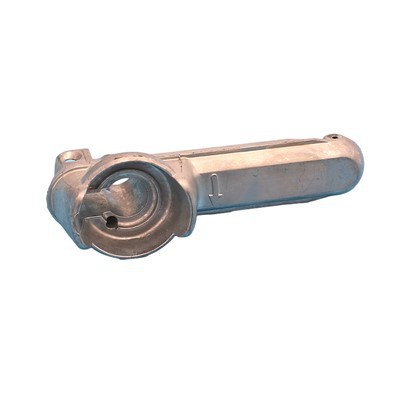
Understanding the Strength – to – Weight Ratio
The strength – to – weight ratio is a measure of how much load a material can withstand relative to its weight. In the context of aluminum die casting parts, this ratio is particularly important because it allows designers and engineers to create lightweight yet strong components. Aluminum is known for its relatively low density compared to other metals such as steel. The density of aluminum is approximately 2.7 g/cm³, while steel has a density of around 7.85 g/cm³. This means that for the same volume, an aluminum part will weigh significantly less than a steel part.
However, the low weight alone is not enough. Aluminum also offers good strength properties. The strength of aluminum can be further enhanced through alloying and heat treatment processes. For example, aluminum alloys such as A380, which is commonly used in die casting, have excellent mechanical properties. A380 alloy has a tensile strength of around 310 MPa and a yield strength of about 207 MPa. These values indicate that the alloy can withstand a considerable amount of stress before it starts to deform or break.
When we calculate the strength – to – weight ratio, we divide the strength of the material (either tensile or yield strength) by its density. For aluminum die casting parts made from A380 alloy, the high strength combined with the low density results in an impressive strength – to – weight ratio. This ratio allows for the design of parts that can carry heavy loads without adding excessive weight to the overall system.
Advantages of High Strength – to – Weight Ratio in Aluminum Die Casting Parts
The high strength – to – weight ratio of aluminum die casting parts brings several advantages to different industries.
In the automotive industry, weight reduction is a major goal as it directly impacts fuel efficiency. By using aluminum die casting parts with a high strength – to – weight ratio, automakers can reduce the weight of vehicles without sacrificing structural integrity. For example, engine blocks, transmission cases, and suspension components can be made from aluminum die casting. These parts need to be strong enough to withstand the high stresses and forces generated during engine operation and vehicle movement. The high strength – to – weight ratio of aluminum allows for the creation of these parts that are both lightweight and durable.
In the aerospace industry, weight is an even more critical factor. Every gram of weight reduction can translate into significant savings in fuel consumption and increased payload capacity. Aluminum die casting parts are widely used in aircraft structures, such as wing components, fuselage parts, and landing gear. The high strength – to – weight ratio of aluminum enables the construction of aircraft that are lighter and more fuel – efficient, while still meeting the strict safety and performance requirements.
Consumer electronics also benefit from the high strength – to – weight ratio of aluminum die casting parts. Devices such as laptops, smartphones, and tablets need to be lightweight for portability, but they also need to be strong enough to withstand daily use. Aluminum die casting is used to create the casings and frames of these devices. The high strength – to – weight ratio ensures that the devices are both lightweight and resistant to damage.
Factors Affecting the Strength – to – Weight Ratio of Aluminum Die Casting Parts
Several factors can influence the strength – to – weight ratio of aluminum die casting parts.
Alloy composition is one of the most important factors. Different aluminum alloys have different mechanical properties. For example, alloys with higher amounts of copper or silicon may have higher strength but also slightly higher density. The choice of alloy depends on the specific requirements of the application. If high strength is the primary concern, an alloy with a higher concentration of strengthening elements may be selected. However, if weight reduction is more critical, an alloy with a lower density may be preferred.
The die casting process itself can also affect the strength – to – weight ratio. Proper process control is essential to ensure that the parts have consistent quality. Factors such as casting temperature, pressure, and cooling rate can influence the microstructure of the aluminum alloy, which in turn affects its strength. For example, if the casting temperature is too high, the alloy may have a coarser grain structure, which can reduce its strength. On the other hand, if the cooling rate is too fast, the part may develop internal stresses, which can also affect its performance.
Heat treatment is another factor that can enhance the strength – to – weight ratio of aluminum die casting parts. Heat treatment processes such as solution heat treatment and aging can improve the mechanical properties of the alloy. Solution heat treatment involves heating the part to a high temperature and then quenching it to dissolve the alloying elements in the aluminum matrix. Aging is then carried out at a lower temperature to precipitate the dissolved elements, which increases the strength of the alloy.
Our Capabilities as an Aluminum Die Casting Parts Supplier
As a supplier of aluminum die casting parts, we have the expertise and resources to produce high – quality parts with excellent strength – to – weight ratios. We have a team of experienced engineers who are well – versed in the selection of the appropriate aluminum alloys for different applications. We can analyze the specific requirements of our clients and recommend the best alloy to achieve the desired strength – to – weight ratio.
Our state – of – the – art die casting facilities are equipped with advanced technology to ensure precise control of the casting process. We use computer – controlled die casting machines that can accurately control the temperature, pressure, and cooling rate. This allows us to produce parts with consistent quality and optimal strength – to – weight ratios.
In addition, we offer a comprehensive heat treatment service. Our heat treatment facilities are capable of performing various heat treatment processes to enhance the mechanical properties of the aluminum die casting parts. We follow strict quality control procedures to ensure that the heat – treated parts meet the required specifications.
Conclusion
The strength – to – weight ratio of aluminum die casting parts is a crucial factor that makes them highly desirable in a wide range of industries. The combination of low density and good strength properties allows for the creation of lightweight yet strong components. As a supplier of aluminum die casting parts, we are committed to providing our clients with high – quality parts that meet their specific requirements. Whether you are in the automotive, aerospace, or consumer electronics industry, our expertise in aluminum die casting and our focus on achieving excellent strength – to – weight ratios can help you create innovative and efficient products.
Die Casting Parts If you are interested in purchasing aluminum die casting parts, we invite you to contact us for a detailed discussion. Our team of experts will be happy to assist you in finding the best solutions for your needs.
References
- Metals Handbook: Die Casting, ASM International
- Aluminum Association, "Properties and Applications of Aluminum Alloys"
- Automotive Materials Handbook, Society of Automotive Engineers (SAE)
Suzhou Ruide Die-Casting Mold Co., Ltd.
Address: No.2, Wanchen Road, Huayang Village, Wangting Town, Xiangcheng District, Suzhou City, Jiangsu Province
E-mail: jada@cnrdmj.com.cn
WebSite: https://www.cnrdmold.com/
